(A new feature. Looking for something to watch? Let this occasional movie blogger be your guide. Presenting "A Brief Unsolicited Enthusiastic Recommendation." First up: Tower from 2016.)
On August 1, 1966 a man with a sniper rifle went to the top of a tower on the campus of the University of Texas and opened fire. For a long time (but not long enough) it held the record for the most deadly school shooting. Tower is a documentary of the 96 minutes the shooter spent on his deadly perch. It is told in typical documentary fashion, with interviews, voiceovers, flashbacks and reenactments. But the reenactments and some interviews are portrayed using rotoscope animation. Rotoscope means that the animation is done overtop of real footage of the subjects. The technique creates a unique look that manages to be both lifelike and abstract.
Reenactments in documentaries can be distracting. The actors often look nothing like the people they portray and the scenes and effects are often cheaply made - like when survivors of a shipwreck are obviously floating in a small pool inside a studio, or when lost hikers survive the night in a cave clearly made out of plaster and foam. The animation in Tower is used brilliantly to avoid being distracting. It seems counterintuitive, but by not attempting to be lifelike re-creation, the animated scenes end up making the action seem more real, true, and vivid. It achieves this while still maintaining its own artistic beauty: the animation itself is just really cool.
The story of the shooting gets to the heart of tragedy and the beautiful things that almost always come out of it. Its focuses on the bravery, selflessness, and heroism of the first responders, classmates, faculty, and citizens who took action during the crisis. It also explores the healing and forgiveness that came after, highlighting the beautiful side of human nature and showing that that side is the dominant one or maybe the only one. There may not be an evil side. The movie doesn’t portray the the shooter as an evil monster or less than human, but as a severely ill individual. That doesn’t make anything he did acceptable or even understandable. But for at least one woman in the film, it helped her forgive and move on. And that’s a beautiful thing.
Tower is currently available on Netflix.
(Even if rotoscope-animated school shooting documentaries aren't your typical fare, give it a try. You won't be disappointed.)
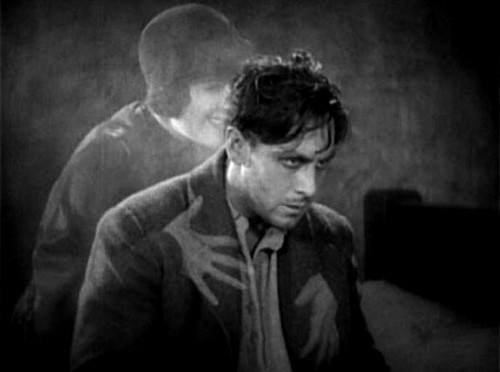
Sunrise is a silent film that was released at the end of the silent era when artistic film technique had reached its peak. It won the first and only Oscar for “Unique and Artistic Production” and that’s a good description of the movie. The story, which seems like it should be unbearably sappy – a woman from the city tempts a farmer away from his wife, he tries to murder the wife, but they rediscover their love for each other – is rendered in such surprisingly interesting visuals that it all works somehow. The story doesn’t say much in itself, except for early 20 th century ideals about how virtuous women should be meek and forgiving, sexual women are dangerous and conniving, and men will do anything for either type of woman (and that women fit into those types). But the movie uses its visuals as more than then-modern showcases of special effects and camerawork. The techniques fit to tell a simple and pure story of love and marriage and it all fits together. The ending is also genuinely powerful.
#81 – Spartacus (1960) – Stanley Kubrick
Spartacus raises a loyal army of slaves and leads a rebellion against the Roman Empire, solely on the strength of his integrity and his cleft chin. The two together – the good character and the rigid masculinity – combine in Spartacus to form a noble manliness. A real man, as shown by Spartacus and the dedicated army he inspired, is equal parts hard and soft, and knows when to use each.
Spartacus is one of the great characters of film, and Spartacus is the best epic I have ever seen.
#80 – The Apartment
If Spartacus was the right amount of hard and soft, “Buddy Boy” C.C. Baxter is only soft. He allows himself to get taken advantage of by men more powerful than he is, lending out the key to his apartment so his superiors can use it for illicit rendezvous with women who aren’t their wives. He is walked all over, over and over, until one day finally… Well, I’m not sure the day really comes.
#79 – The Wild Bunch
“If they move, kill ‘em,” William Holden tells his gang at the beginning, but the instruction seems to apply throughout the whole movie. Because a lot of people move. The “Wild Bunch Ending” became a screenwriting term, referring to the chaotic bloodbath that seems destined to come where lawlessness lives. Peckinpaw shows the senselessness and inevitability of violence, shot with disorienting cuts and zooms and a soundtrack of gunshots and the screams of the dying. Trains and cars are starting to arrive in the west and it signals the death of a way of life that was rough and pointless. Death to death and more death.
#78 – Modern Times (1936)
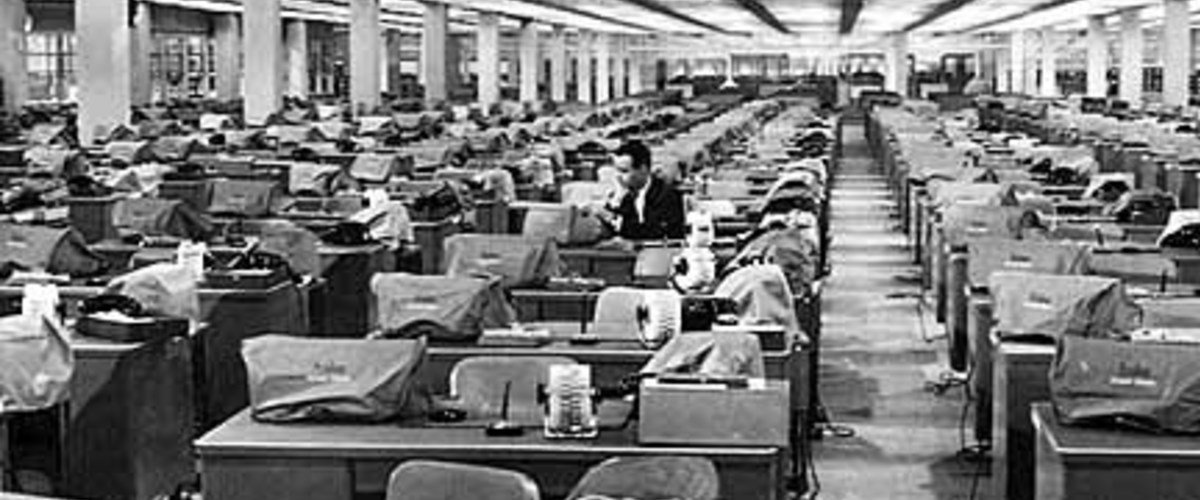
When the worker is literally a cog in a machine, the worker has no rights. Charlie Chaplin was accused of being a communist and a socialist (and eventually condemned for it?). Whatever he was, he had sympathy for the workers, the people at the bottom of the food chain, the scraps at the bottom of the barrel, the bottom rung of the ladder. His character gets swept up into union protests and labour rights disputes, he works on an assembly line, and ends up in jail for reasons unclear. The system seems to grind and grind: as long as there is production it doesn’t matter how it’s produced, or even what it is producing. Modern Times is a satire and a cutting critique, as it gently points out and calls out the absurdity of the modern state and its systems, and it does it without saying a word.
Most ‘best of the year so far’ lists are released halfway
through the year. I’m doing mine now. We just survived a real dud of a summer
blockbuster season, but there have been some great movies this year. They’ve
been sprouting up here and there – sometimes it just takes a little weeding to
find them.
5. The Lobster
At one point in The
Lobster a woman tries to kill herself by jumping out of a first-floor
window. As she lays bloodied on the sidewalk her screams of agony are played as
a joke. That’s the darkness of the humor in this movie. And it is funny – the
woman had much higher windows available to her. It’s also a critique of love
and dating, as she was driven to such foolish desperation by the fact that she
was on her last day to find a mate, and if she failed she would be turned into
an animal. The botched suicide also serves our hero’s (Collin Farrell)
purposes: as compatibility is taken dead-literally, the woman he’s interested
in watches the suffering jumper with casual indifference and so he does too (he
wins her over when she fakes choking to death in a hot tub and he just watches
her sink into the water). It’s absurd and weird and darkly funny (though there
is plenty of light humor as well – the dance scene in the forest is hilarious
and no one gets killed). It’s also full of insight that I think will take more
than one viewing to totally grasp.
4. Krisha
Krisha is director Trey Edward Shults’ feature debut. The
movie cost $14,000 to make and was shot using mostly Shults’ friends and
relatives as actors. I didn’t know this before I watched it and was amazed at
how well the movie captured the reality of family gatherings. Krisha takes
place over one Thanksgiving evening. The extended family is all together –
brothers and cousins in college, great grandma makes it home, there’s a new
baby, and Krisha has come back after having been away for years. People sit and
chat, play games, watch sports, horse around, play with dogs, and it all
happens exactly as those things happen in real life. The jokes are jokes real
people make and the conversations are real conversations. Shults’ casting
choice may have been forced by his small budget, but it’s also crucial to the
movie’s success. I’ve never had a family gathering fall apart like this one
does, but I’m sure it would happen the way it happens here. There is a lot of
discomfort and awkwardness, like when something doesn’t go quite right in
someone else’s house, or like watching your friend’s parents fight. You just
want to get out of there but you have to be polite. Krisha captures that tension and the complicated and sometimes
messy details of extended family life. Shults’ next film is set to be a horror
movie and you can see that interest in Krisha.
There’s nothing scary or disturbing, but Krisha’s return, like a ghost or
an intruder in a horror film, has the disruptive effect that troubled family
members often bring home with them.
3. Everybody Wants Some!!
This movie has been described as a spiritual sequel to
199_’s Dazed and Confused. But Everybody Wants Some!! is director
Richard Linklater’s follow-up to last year’s Boyhood, the 12-years-in-the-making exploration of, well, boyhood,
and this movie is more of a continuation of that one. It follows the adventures
and misadventures of college-aged guys, in a way, picking up where Boyhood left off. These college guys are
all baseball players at the end of their boyhood facing the excitement and
anxieties of stepping towards manhood.
It’s set in the 80s and it is funny so it could easily have
fallen into the stereotypes of 80s comedies like Revenge of the Nerds, Weird Science, or Animal House, where there are only jocks and geeks and babes and
everyone plays their role. But here the characters are unique and complicated.
Just when you expect one to be a certain kind of guy he’ll do something that
that type of guy doesn’t do. And yet it’s also realistic, as it shows the way
guys that age act – the jokes they make, the fun they have, and even the doubts
and fears they face as they go from being big fish in small ponds to just fish.
The movie also avoids turning the guys into a bunch of unlikable jocks.
Everyone here is fun to spend time with. It also avoids structural clichés –
where things work for a while, a roadblock is hit, then everyone learns a
lesson. Life doesn’t happen like that and the movie doesn’t go that way. Life
just begins happening.
1. The Witch
1. Hunt for the Wilderpeople
I have a tie. I thought Hunt for the Wilderpeople would be a clear number one since I had such a
great time watching it. But The Witch has
left me with so much more to chew on and I can’t shake it.
It’s hard to say The
Witch isn’t a horror movie. After all, Satan is in the movie and there is
at least one witch. But it was marketed as a scary movie and people who went to it expecting that thrill of
feeling terrified went home disappointed, and I think, missing the point of the
movie (I mentioned this problem when I wrote about the Sixth Sense). The Witch is scary, but it’s a lot more
than that.
Set in New England in the 1600s, the movie tells the tale
(and really, it is a tale – the subtitle is “A New England Folktale”) of a family
exiled from their Puritan establishment when the father refuses to compromise
his beliefs. Those beliefs are the family’s main crop and its sustenance as
their corn crop is failing and there’s nothing in the woods by their isolated
house. Except that there is.
The family consists of the parents, a baby, two young twins,
a young boy, and an adolescent girl, and without spoiling anything, things
happen to each of them one by one and those things aren’t pleasant.
But the movie centers around belief. Here it is not the
charitable, all-loving Christianity, but the hard Christianity
of self-loathing, guilt, and the crushing weight of demanded perfectionism –
the gospel of inadequacy, desperate for grace and redemption. At one point the
boy recites, “My corrupt nature is empty of grace, bent unto sin, only unto
sin, and that continually.” And the family’s isolated and fragile circumstances
magnify this severe, punishing belief until it becomes the obsessive and almost
fanatic devotion of believers who have nothing else but their belief. So when
the terrible things start happening we wonder if they are really happening, or
if it’s the imagined terrors of the desperately devout.
The terrors from the woods gradually mutate this desperate
belief until it infects the family and tears it apart. There are frightening
and disturbing scenes, the acting is wonderful, and the period setting,
complete with accurate dialogue (watch it with subtitles), is unique and adds
to the haunting atmosphere. “What went we out into this wilderness to find?”
the father asks at the beginning. If you haven’t seen The Witch, you should find out.
Hunt for the
Wilderpeople is in many ways the opposite of The Witch. It is bright, upbeat, and full of life and humor. It tells
the story of Ricky Baker, a 13-year-old boy who has bounced around foster homes
and the child welfare system because of his various crimes that include “kicking
stuff, knocking stuff over, and spitting.” The movie begins with his arrival at
Hec and Bella’s house way out in the New Zealand wilderness. Things look good
for a while for Ricky but they take a turn and he decides to run away. Hector
quickly finds him but injures himself and the two’s delayed return is
misinterpreted and leads to a national manhunt.
The gruff-old-guy-takes-a-youngster-under-his-wing formula
has been done before, but Wilderpeople manages
the perfect balance of everything and makes it fresh and fun. Every character
is likable – even the villains, who remain villainous despite their likability.
There’s wackiness, but it’s not over-the-top or slapstick. And there are
heartwarming moments, but they’re not sappy or predictable. And it’s hilarious.
It accomplishes something rare these days that the best jokes aren’t in the
trailer. And even rarer: the best jokes from the trailer are even funnier in
context. It’s a wonderful and positive movie and one of the best times I’ve had
at a movie this year.
I didn’t mean to pick these two as my co-favorites, but it
shows the power of movies that two very different films can be so affecting and
enjoyable for such vastly different reasons.
“As far back as I remember, I always wanted to be a
gangster,” Ray Liotta’s Henry Hill tells us in a voiceover at the beginning of Goodfellas. This comes a few seconds
after we watch him and his fellow gangsters finish off a brutal murder, and in
that context he’s hard to believe – who grows up hoping to do something like
that? But in this case Henry doesn’t actually do any of the stabbing or
shooting himself, he’s just the driver. And the look on his face is one, not so
much of disgust or surprise, but of slight uneasiness and subtle discomfort,
like he’s seen such things before but doesn’t enjoy it or revel in it like his
associates seem to. That subtlety is the heart of the movie, as it follows
Hill’s rise through the ranks of the “family” of gangsters while exploring the
hallow grandiosity of their lifestyle and world.
The voiceover leads to the early years of Hill’s life when
he was dreaming of the gangster life. And from his teenage perspective it’s
easy to see why. It’s all money and power and freedom. As Hill ages and moves
up the organization, he is no less awestruck by the money and power and freedom
he wields himself. This freedom and power leads to plenty of unpunished
violence and crime, with the cool looks of the wiseguys always assuring
themselves that everything is under control. Hill enacts most of his “business”
at the side of Tommy DeVito (Joe Pesci) and James Conway (Robert De Niro). Both
are loose cannons – Conway more menacingly so, and DeVito more obviously as he
murders in petty fits of rage.
Eventually, the gangsters arrogantly try to control the
uncontrollable and things start to fall apart. And it is the look on Hill’s
face at the beginning that is most telling. He’s as wrapped up in the violence
and crime as anyone else, but he seems to recognize the truth of it all. He
knows DeVito is a lunatic and that Conway is ultimately incapable and that
plans are going to fall apart and that they’re not immune from law and
punishment. But he won’t admit it, as he desperately and pathetically tries to
keep the dream alive long after it is dead, as he can’t stand being an “average
nobody.”
Goodfellas is an
excellent, honest, and realistic portrait of the fast, but ultimately hollow
and short, lives of gangsters, and is well-deserving of its place in the
pantheon of gangster movies.
#91 - Sophie’s Choice (1982) - Alan J. Pakula
Sophie’s Choice follows
an aspiring writer named Stingo (Peter MacNicol) to New York, where he rents a
room in the same building as Polish refugee Sophie (Meryl Streep). He quickly
becomes friends with her and her abusive and erratic boyfriend Nathan (Kevin
Kline). They gallivant around and dress and act like characters from The Great Gatsby while poor Stingo is
the third wheel but wishes he was the second. Nathan acts stranger and stranger
and Sophie seems to have something to get off her chest. Meryl Streep is
amazing as Sophie and she plays her desperate longing and private torment with
a powerful subtlety, and does it in multiple languages. I think it’s so
well-established that Streep is the world’s best actress that we get tired of
it and look for someone else. But no one else could do what she does in Sophie’s Choice.
The movie is two and a half hours long, and it’s a long two
and a half hours. At its heart Sophie’s
Choice is a Holocaust movie, but it only spends a fraction of its time on
the holocaust. The rest is spent on the three friends, their weird dynamic, and
Nathan’s psychosis. And that might be an interesting movie in itself. But the Holocaust
sectionsare so good and so powerful
that the trio of friends get tiresome and almost irrelevant.
The choice in Sophie’s
Choice is gut-wrenching and awful. It’s horrible to watch, but also
important. The scene manages to distill the terror and sickening evil of the Holocaust
down to one individual parent’s unimaginable nightmare. It brings the sometimes
unfathomable scale of the Holocaust down to a single relatable horror, making
it possible to begin to appreciate the awfulness of the whole thing. In doing
so it achieves what all entertainment dealing with the Holocaust should achieve
and does it without being exploitative.
#90 - Swing Time (1936) - George Stevens
Swing Time is a
romantic comedy musical, but it’s mostly a dance movie. Fred Astaire and Ginger
Rogers dance their way through the rom-com conventions their 1930s movies
helped establish – the zany coincidences, misunderstandings, and mistaken
identities – and do it with such skill and chemistry that is fun to watch. Movies
like Swing Time are what make this
project worthwhile. It’s not a movie I would have chosen to watch otherwise – I
don’t usually watch musicals, romantic comedies, or dance movies. But I really
enjoyed it.
And I don’t know much about dance, but I can tell when
someone is really good at something. And Fred Astaire and Ginger Rogers are
great dancers, and they seem to know it and to dance as though celebrating how
great they are and how well they do it together. But it’s confidence and not
arrogance and their enjoyment is contagious. The two also have amazing
chemistry that comes from working together on many different films. They bring
a classiness and charm that transcends all the cheesiness and leaves them just
plain likeable.
The plot is as goofy as most in the genre. Astaire forgets
to go to his wedding and has to go to New York to prove to his jilted fiancée that
he can make $25,000 in order to deserve a second chance. But while in New York
he accidentally becomes half of a famous dance partnership with Rogers. Sparks
fly and it’s obvious where things are headed. But it’s all good fun. All the
actors seem to know it’s ridiculous but have a great time anyway.
The French Connection is a movie of contrasts. The opening scenes
jump between Marseilles, France and New York City, highlighting the luxurious
French coast and the dingy, deserted, urban wastelands of 1970s New York. A hit
is carried out in France in the opening scene as the man behind it strolls his ocean-side
estate, casually fishes, and drinks wine with his beautiful young wife. And in
New York, two white cops patrol a black bar, rough up its patrons, chase one of
them to an abandoned industrial park and rough him up some more as one of them
tells his partner, “never trust a nigger.” The beauty and elegance of the life
of the criminal is contrasted with the gritty and grimy world of the New York
cops. This contrast strays from the traditional buddy-cop genre and sets us up
to root for the bigoted and sleazy cops in their world of dirt who are trying
to bring down the elegant and outwardly-respectable criminals.
The cops are Jimmy “Popeye” Doyle (Gene Hackman) and Buddy
Russo (Roy Scheider). They are narcotics detectives stuck with a dry spell of
drug activity, looking for leads and something to do. And without either, they
follow one of Popeye’s notorious hunches – notorious, we later learn, because
one of them led to the death of a cop, though we don’t learn why or how, but
Popeye will fight anyone who brings it up. That’s our hero. The chief relents
and allows the pair to follow and wiretap a suspicious-looking fella who wines
and dines with high society by night and slums it with his wig-wearing wife at
their small-time grocery store by day. After a few cold days and nights of
stalking, the hunch pays off as the two overhear their target Sal Boca (Tony Lo
Bianco) arrange to meet up with a Frenchman for some kind of drug deal.
The rest of the movie is Popeye and Buddy putting the pieces
together. The contrasts continue. We learn more of the details of the plan as
the Frenchman and his associates plot it out at their rendezvous on a seaside
castle in France, while the cops stand outside and wander around freezing in New
York, among petty drug dealers and users, litter, and burning garbage cans. The
French plan is sophisticated – it involves a famous French actor importing a
car (stashed with heroin) to use for a documentary in New York, various levels
of the mob, a chemist, a grocery store cover-up, and international
coordination. The cops, on the other hand, rely on a hunch and a lucky break
from a questionable wiretap. At one point the Frenchman makes it to New York
and Popeye tails him. In one scene the Frenchman is eating at a fancy
restaurant. It is shot so that he is in the foreground, in the warm light of
the restaurant, enjoying his multi-course meal, while through the window and
across the street, Popeye leans against a wall, warming his hands on a paper
cup of coffee and eating a greasy piece of pizza. The life of the criminal and
the life of the cop.
The action picks up from there as the Frenchman is fully
aware of being followed and cleverly evades Popeye in the subway in one of the
best scenes of the film. The Frenchmen then turn the tables and try to take out
Popeye with a sniper. This leads to another one of the best scenes and probably
the most well-known scene from the movie. Popeye chases the sniper to the
subway (or elevated train). The sniper gets on and Popeye has to confiscate a
car to chase down the train. The scene is spectacular and still genuinely
thrilling. The only soundtrack during the chase is the screech of tires, the
roar of the engine, and chaotic horn honking. And even here there is stark
contrast, as the scene cuts between the sniper calmly making his way through
the train to take the driver hostage, while below Popeye crashes the car a couple
times, honking and cursing like a madman, while narrowly avoiding traffic and
pedestrians. Apparently it was shot with real traffic and real pedestrians and
at one point the car has to avoid hitting a real woman pushing a carriage with
a real baby inside. The realness is what makes it thrilling.
The entire movie is filled with this sense of realness – it
feels like a realistic depiction of police work. Though Popeye is a loose
cannon, he’s not a rogue cop. He’s not likeable and he’s not much of a hero,
but he’s not a villain or an anti-hero either. This ambiguity feels
true-to-life as things are rarely black and white. His methods are questionable
and sometimes morally ambiguous, but he gets the job done. The movie is based
on the true story of one of the biggest drug busts in history, and was adapted
from a book detailing the real-life details. The French Connection preserves this authentic approach as the
ending manages to be clear and cinematically satisfying, while preserving the
ambiguity, and troubling aspects of real-life police work and the legal system.
And it shows that no matter how posh, polished, and elegant the criminals, they
can’t be caught without the cops getting their hands dirty.
The title of Pulp Fiction refers to the type of stories written in old-fashioned
novels and magazines printed on cheap paper (wood pulp paper) best known for
their lurid, sensational, and exploitative subject matter. With titles such as Dime Detective, Startling Stories, Weird
Tales, Thrilling Wonder Stories, and Spicy
Detective, the stories dealt with the darker, seedier side of society, and
usually involved crime, criminals, and violence. Pulp Fiction deals with the dark and seedy side of society,
involves crime, criminals, and violence, and is often Startling, Weird,
Thrilling, and even a little Spicy. It pays homage to the pulp tradition and
revels in its messiness, rolling around in the muck like a pig – but a loveable
pig enjoying the muck for the muck’s sake.
And there
is plenty of muck. Hitmen, gangsters, drug dealers, petty criminals, and
rapists; overdoses, torture, robberies, murders, back stabbings, and actual
stabbings; sex, foul language, racism, and bloody, bloody violence. But it is
done in a tongue-in-cheek, ironic way that makes all the filth fun and often
very funny. Some of it is over-the-top, as it incorporates a comic, wacky style
of violence common in pulpy superhero stories and animation. But it also
includes the serious violence of gangster movies and crime stories. The movie
plays with the smut and grime using the full bag of tricks it inherited from
the variety of pulp genres. It’s funny but it’s not a comedy. It’s dark but it’s
not a noir. It transcends genres as it incorporates and pays tribute to the
variety in the pulp tradition, and it has generated tributes and copycats as
one of the most influential films of the 1990s.
One of the things Pulp Fiction is best known for its narrative
structure. The movie tells three interconnected stories deliberately out of
order, giving pieces of each story here in there, just a little at a time, cycling
back around and adding a little more until it all comes together. The first story
involves a hitman (John Travolta) escorting his boss’s wife (Uma Thurman) out
for a night out at a 1950s-style restaurant when she accidentally overdoses on
his potent stash of heroin. His frantic efforts to revive her with the help of
his drug dealer are darkly funny. The next story follows the efforts of two
hitmen (Travolta again, and Samuel L. Jackson, who is the highlight of an
excellent cast) stuck with a bloodied car when one of them accidentally shoots
an associate in the face while they’re driving in broad daylight. A cleanup man
is dispatched to Quentin Tarantino’s house and they frantically clean up the
car and the hitmen and leave before Mrs. Tarantino gets home from her graveyard
shift at the hospital. It’s absurd and darkly funny again. And the last story
involves a boxer (Bruce Willis) hired by the gangster boss (Marsellus Wallace,
played by Ving Rhames) to throw a fight. He double-crosses Wallace, bets on
himself, and tries to flee the country. But a watch handed down through
generations (explained in a flashback by an incredible Christopher Walken
cameo) that he left at his apartment brings him face to face with Wallace. The
two of them eventually end up in a dungeon of sadomasochistic redneck rapists.
Everything is episodic and
chronologically out of order. We are left in the dark for a long time about why
the movie starts with couple of lunatic robbers, Honey Bunny and Pumpkin,
planning a coffee shop robbery, or how dead characters show up alive later, or
why the hitmen show up in beach clothes after a hit. But Tarantino leaves no
strings loose and everything fits together in very satisfying ways.
It’s all a little gross, but the
movie knows it’s gross and it’s having fun. And this fun is made obvious
through the film’s use of language. The Oscar-winning script is known for its
dialogue. At his best Tarantino can create nerve-wracking tension and suspense
entirely on the strength of his characters’ conversations (one of my favorite examples, from Inglorious
Basterds). And in Pulp Fiction
Tarantino is at his best. He’s able to create that tension through mundane
conversations about ordinary life that ordinary people would have. Putting those
ordinary conversations in unusual situations heightens the awareness of the
unusual situation and puts us on edge. As the hitmen drive to a building, get
their guns, ride the elevator, and walk down the hall, they discuss the
differences between the US and Europe (the well-known “Royale with cheese” –
Paris’s take on the Quarter Pounder) and whether a foot massage is on the same
romantic spectrum as certain other sex acts. The conversations are funny, but
they’re the kind most people have with friends over lunch or while hanging out.
You don’t expect such talk on the way to a hit. It continues even when they
reach their target and the tension rises with Jackson’s voice as talk of
burgers leads to a Biblical call-to-arms, pre-hit speech.
The dialogue is brilliant
throughout the movie, as it powers and provides the electricity behind it. It’s
like a new kind of action movie, with no need for high-octane stunts and
explosions, as all the action is done in the language. Such language makes the
characters and situations vibrant and memorable. It’s a big reason it became a
cult classic and the favorite of fanboys around the world.
Like the tradition that gave rise
to it, Pulp Fiction revels in the
seedy and the profane. What passes for uplifting or moral is covered in a layer
of dirt: redemption, resurrection, forgiveness, and honor happen among hitmen, addicts,
gangsters, and murderers. But it all fits, and in fitting it all together, Pulp Fiction pays tribute to the pulp
tradition, stacking up all its elements and splattering them all over the
place.
The Last Picture Show
takes place in a small town and begins and ends with talk of high school
football, just as life begins and ends with talk of high school football in
small towns across North America. The town in the movie is a fictional one called
Anarene, Texas, but it could be any real-life, wind-blown, dusty town anywhere.
It is dry and still drying up, shrivelling up and drying out its inhabitants. New
ones grow but they dry out too, usually towards the end of high school, and
some stay dry their whole lives, while a few escape to get swallowed in the big
city or killed in a war. The movie was released in 1971 but takes place in 1951
when kids got married or went to college or chose one of a few jobs or joined
the army. Stay or go, but in a small town even leaving isn’t leaving – when everyone
knows everyone they know where they’re going and it’s like not leaving at all.
The movie follows the adventures and misadventures of
friends Sonny (Timothy Bottoms) and Duane (a young Jeff Bridges) as they
navigate their last year of high school and the pitfalls of graduation. There
isn’t much to do in Anarene except hang out at the pool hall, go to movies, and
chase the only eligible girl Jacy (Cybill Shepherd). Boredom seems to suck out
ambition and harsh realities of life blow through the town like tumbleweeds,
while the boys graduate and move on to nothing at all.
This nothingness is the reward for most high school
graduations, when the system spits out graduates and leaves them to their own
devices, but it seems to be exaggerated in small towns when there was little to
do in the first place. The boys do what teenage boys do with too much time on
their hands: they get into mischief, take impromptu road trips, get drunk, and
try to have sex with girls – or with older women if girls aren’t available.
Sonny has an affair with is coach’s wife, a sympathetic character whose life
was dried up years ago. Duane is in love with Jacy who is more concerned with
trying to have sex (for the first time) with boys – or with older men if boys
aren’t available. She’s naïve but her good looks make her powerful and she wields
that power like a sword too big to hold, tipping this way and that. Sonny takes
his turn with her when she gets bored. She seems like a way out, like her
beauty could take them both far and away, but word travels quickly and their foray
is rooted out and snapped off.
The moral center of the town is Sam the Lion (Ben Johnson),
who owns the diner, the pool hall, and the movie theatre. Sonny’s family
situation is never clear, but it is clear that it isn’t good, and Sam is a
father figure to Sonny and almost everyone else in town. He’s wise, kind, and
thoughtful and seems to know the secret to life. At one point he takes Sonny
and another boy out to a pond to fish, even though there’s nothing in the pond
but turtles and he doesn’t like to touch or eat fish anyway. Instead of fish,
he casts for memories, ruminating on the past, when he used to take a girl
there, skinny dipping, riding horses, and being in love. These memories seem to
be his secret to keeping alive in the dying town. But as we watch Sonny and
Duane fumbling around trying and failing to make such life-sustaining memories,
we have little hope for their prospects. And even Sam’s memories only power him
for so long as they seem to burn up in an emptying gas tank. Sam the Lion may
be successful in Anarene, but he’s still in Anarene.
The movie is shot in black and white as if to emphasize the
drabness of the town and life in it. There seems to be no buildings more than a
storey high and the whole town looks hunched and huddled against the cold and
heat and wind, or like it’s embarrassed to stand up straight and be something
more. The soundtrack is made up of radios and jukeboxes actually playing in the
scenes – characters change stations and put in money and make selections in the
diner. It is all old country music, mostly Hank Williams, twanging about love
when love is in the air and loss when sadness and disappointment resurface. The
music is another constant in the town where little changes.
Some things do eventually change in town but they’re not for
the better – the title gives one of these changes away. It’s not a hopeful
movie, but it’s not pessimistic or depressing either. It’s realistic and beautiful in its sadness.
Sometimes life loses its colour, not everyone succeeds, and boredom overcomes.
And in small towns AM radios continue to narrate life while disappointing high
school football teams and the dating lives of teenagers fill the gossip void
until the team turns over the next year or someone gets married or dies.
Do the Right Thing takes
place on one long, hot day in one neighborhood in Brooklyn. The day is hotter
than usual but it’s otherwise a normal day – people come and go, living their
normal lives, doing what they always do. And for the most part, like most people,
they don’t do much. They walk around with friends, they take showers, they sit
and watch other people, they listen to music, they talk about sports, and they
eat pizza. This routine, day-to-day state of things involves some racial
tension, but it’s mostly under the surface; it pokes out here and there, but it’s
mostly balanced in a state of precarious equilibrium and covered by a blanket
of ordinariness. This normalness is the heart of the movie: Do the Right Thing is about the
mundanity of racism. In the movie it escalates on an otherwise normal day, as
it does in life, and in both cases it’s hard to make sense of.
The pizza place, Sal’s pizzeria, is the centre of the movie,
and in many ways, the neighborhood. Sal, an Italian-American (played by Danny
Aiello), has been feeding the mostly black neighborhood for generations. He
runs the place with his two sons, one of whom is openly racist while the other
is timid and accepting. Their delivery boy is Mookie (played by Spike Lee
himself), a likeable guy and the place’s outlet into the community. The rest of
the neighborhood is filled with interesting characters: there’s Da Mayor, a jolly
drunk who knows everybody; Radio Raheem carries a boom box everywhere and only
listens to Public Enemy; Mother Sister is a kind of witchy neighborhood matriarch;
Buggin’ Out is a wannabe activist, more in line with Malcom X than Martin
Luther King Jr; there’s a group of old guys on lawn chairs gossiping and
complaining and reminiscing; and a local DJ watching over everything. Everyone
is full of life and the neighborhood is vibrant. But a tension is cooking like
Sal’s pizzas and everything on the hot street.
The tension eventually boils over. It has something to do
with Sal’s “Wall of Fame” that features only Italian-American celebrities. But
that doesn’t quite explain it. Radio Raheem also refuses to turn his music down
while he’s at Sal’s, and that causes problems. But that’s not exactly what set
off the violence either. There are reasons that aren’t reasons, explanations
that don’t quite explain, and frustrating and confusing contradictions. The
less likable characters do unlikeable things, but they’re sympathetic. And the
likeable characters do unlikeable things with little explanation. There are no
villains and no heroes. The reasons for the chaos are chaotic themselves. And
in the chaos the movie doesn’t try to explain or suggest reasons why racism
exists. Though it’s not filled with love, the movie isn’t filled with hate
either. it just shows racism in its ordinary setting – in an ordinary
neighborhood on an ordinary day – where it lurks just under the surface, ready
to emerge for whatever reason, or for no reason at all.
The movie highlights this complicated and beguiling nature
of racism that makes it so profoundly painful. And though it knows there is no
satisfying explanation for it, it seeks understanding through its complex and
dynamic characters. They are all real people and it would be difficult not to
feel sympathy for each of them by the end of the movie. Even with the most
overtly racist character there is a sense that his attitude has more to do with
the negative feelings he has for himself than any feelings he has for anyone
else. It’s one of the jobs of a movie to put the viewer in other people’s shoes
and Do the Right Thing does this
better than any movie I’ve seen. We may not like their reasons for doing what
they do – or even understand the reasons – but we feel with them and for them even in the worst moments.
Just as it offers no explanation for racism, the movie also
offers no suggestion for how to deal with it. When it was released in 1989
there was some worry it would inspire race riots like the one in the movie. I
don’t think that ever happened and the fear was misplaced for a few reasons.
When the dust settles at the end, it’s clear the violence accomplished nothing.
The movie also ends with quotes from both Martin Luther King Jr. and Malcolm X.
The quotes highlight the approaches of both leaders but neither is
highlighted over the other. The point isn’t so much about how to deal with the
problem, but the fact that it needs to be dealt with.
Do the Right Thing is
an excellent movie. It is entertaining, funny, and sad, and full of very human
and rich performances. Even without its complicated message it would be well
worth watching. But the message is what makes it important (and the film
remains important without becoming self-important, which is a difficult balance
to achieve). And it would be cliché to say that a movie that involves
racially-motivated riots, bigotry, suspicion, fear, and violence is timely and
pertinent now as it was in 1989. But that cliché is the point of the movie.
Racism is there. It’s not always visible, there are many reasons for it but
those reasons are hard to comprehend, it makes no sense even while almost making
sense, and there are no easy answers for it. Everyone is responsible or no one
is. But it lives on, under the surface or above it, quietly bubbling behind our
backs or blowing up in our faces.
Blade Runner tells
the story of a young Harrison Ford wandering around in the rain at night in a
future Tokyo-L.A. mashup looking for robot people and trying to get rid of
them. Young Harrison plays Rick Deckard, a Blade Runner (which blades are being
run is never made clear), tasked with hunting down four Replicants who wreaked
havoc somewhere up in space but are now back in town running amok (though the
type of havoc and amok are also unclear). This is all explained in text at the
beginning of the movie and when it disappears so do the stakes it should
establish: the problem is vague and far away and so is any urgency. We don’t
know what they did or what they’re doing and can’t we just leave them alone?
The Replicants are androids, robots that look like humans
and seem like humans. The only way to identify one is to administer a test
using the Voight-Kampff analyzer that detects physical changes as the subject
is put through a series of questions designed to elicit an emotional response.
The escaped Replicants, however, are more advanced and may have developed emotions.
This is why they were given four-year lifespans. But like any conscious
emotional beings, the Replicants would like to live longer than four years and
the clock is ticking.
Blade Runner is
famous for its production design. Flying cars, skyscraper-sized video
advertisements, searchlights, neon neon neon everywhere, bleak, black, dark corporations
spewing out fire, artificial animals. There’s a sunset in one scene, but the
sun stays set and the rain falls. The world is rendered in detail and is a contrast
to the opening scrawl; the world explains itself and there is little need for further exposition or explanation to understand the nightmare world of the future,
teetering as it is on the precipice of a kind of corporate hell. The movie isn’t a case
of style over substance, but style as substance. The film uses the world itself
to ask its interesting questions. If it is unclear why the Replicants are being
hunted, it is enough that the world says they are to be hunted. The world of Blade Runner is the kind of place where
Replicants can’t be.
The vagueness of the Replicant’s crimes creates a lack of
urgency as we watch Deckard deal with each of them. But that
vagueness is also the main point of the movie. In the opening scene one of the
Replicants kills a man who’s doing the Voight-Kampff test on him. The Replicant
doesn’t seem like a pleasant guy, but he doesn’t seem evil either. He kills not
in cold blood, but in self-defence, or at least self-preservation, and that
urge to live and delay mortality is a uniquely human trait (humans being the
only species aware of its mortality). The lines are blurred between human and
non-human and the movie is really about where that line is. And if that
question – what does it mean to be human – seems clichéd, at least Blade Runner asks it in interesting ways.
In a world where life can be created, who gets to determine what is genuine and
what is not?
Blade Runner is a
neo-noir detective story. Deckard has a job to do and has to find a way to do
it. It’s a big one, we’re told at the beginning. And yet he seems to succeed
easily, wandering from clue to clue and bumping into Replicants on the street,
finding them at work and at home, looking at photos and knowing exactly where
they are and killing them off the first chance he gets. Even recruiting him out
of retirement is a breeze. He doesn’t do that kind of thing anymore, but then,
what the hell, he’s doing it again anyway. Without knowing his motivation, each
kill is anticlimactic. Part of that is necessary as we’re left to wonder
whether a Replicant making an honest living as a performer really needs to be
shot down in her underwear in a crowded street. But Deckard broods through the
rain from job to job with animalistic efficiency and no tension. I won’t spoil
the ending (I don’t go for the line of thinking that says that since a movie
came out in 1982 spoilers are fair game – if you haven’t seen it you haven’t
seen it) but it uses Deckard’s mechanical performance to interesting effect. It
just isn’t that fun to watch in the meantime.
That isn’t to say it’s not worth watching. Blade Runner is a sci-fi pioneer and a cult
classic. Its visuals hold up – its 1980s vision of a grim future on the verge
of dystopia is darkly beautiful. And its predictions for the year 2019 are
interesting both for what they get right and wrong. But what keeps people
coming back (besides it being re-released so many times - I watched the “Final
Cut”, which is the last of the movie’s 4 or 5 different versions) is its soft
touch amidst its dark and hardened world. The subtlety is the highlight. But it
cuts two ways, making the movie both very interesting in the questions it
asks and a little boring in the time it takes to ask them.
Yankee Doodle Dandy takes
us back to a time when there were movies called Yankee Doodle Dandy. It’s hard to imagine that title being released
in the last few decades. These days the story of entertainer, playwright,
composer, lyricist, actor, singer, dancer, and producer George M. Cohan
would likely be called The and any
one of those words. We’re serious about our titles these days – there are no
more Dandies or Doodles or the gee-wiz, backslapping attitude that goes along
with them. The difference in titles reflects the difference in times. The movie
was filmed only a few years after the time period it depicts and both the
filmmaking and the subject-matter reflect a bygone era of cheerful patriotism
and innocent hope for the American dream.
The movie begins with Cohan being summoned to the White House,
afraid he might be in trouble for the way he was impersonating the president in
his current show. He walks there in the rain, knocks on the door, and heads up
to oval office, easy as pie. He then sits down with the back of FDR’s head –
who isn’t upset but is happy to see him – and begins reciting his life story.
It’s a fairly absurd way to frame the biopic, but the implausibility has a
good-spirited innocence to it that echoes throughout the movie. It’s the age
when visitors spoke to one security guard on their way to meet the president.
Cohan was born on stage. Not quite, but his parents and
sister were performers and the family formed a touring show when the kids were
very young. The film traces the group’s rise and progress across the still fresh-faced
United States. Such a career path took plenty of dedication and perseverance
from the parents, but it was the young George who had the most confidence,
energy, and charisma, and it was only a matter of time before that fire would
be channeled.
Most of the movie follows Cohan’s rise to fame – his pursuit
of the American dream, pursued as it was on the back of feel-good patriotism
and good-natured American pride. Cohan musicals with names like The Governor’s Son, Running for Office, You’re
a Grand Old Flag, George Washington Jr., The Yankee Prince, and The American Idea stoked the flames of national
pride and made Cohan a Broadway star. This was the age before patriotism and
nationalism had a bad name. Whatever gave them their bad name – whether it was
the World Wars, the Cold War, the Vietnam or Korean Wars, or the War on
Terrorism – American patriotism has a different flavor now than it did then. Cohan’s
America was bright-eyed and positive, and both his songs and the time period
that gave rise to them reflect a more modest kind of patriotism – a pride in
the country, but also a sturdy appreciation for all it provides. History has shown
the ugly side of patriotism and it’s now left in an awkward position. Yankee Doodle Dandy shows a simpler time
– a time when a man could tap-dance his way to the White House.
James Cagney plays Cohan with up-beat earnestness and cheerful
self-confidence. He’s a charismatic rascal, full of gumption and energy. But he’s
so likeable you just want to put him in a headlock and give him a noogie. Cagney’s
apparently accurate way of half-singing half-speaking all Cohan’s songs seems
like it should be irritating but actually makes him more endearing. And being a
movie about the Song-and-Dance Man, Yankee Doodle Dandy has plenty of songs
and dances. The songs are hokey but catchy and memorable. Most of the movie is
a highlight reel of Cagney productions; the film is not so much a musical by
choice but by accident. Some of the performances are longer than they need to
be, but their production value is high and can be entertaining the way they
would be on stage. It’s like Broadway on the screen.
Yankee Doodle Dandy
is a positive movie about an era of hopeful positivity. It shows that with
enough American spirit anyone can achieve the American dream. With hard work,
perseverance, and old-fashioned family values, the son of Irish immigrants can
become one of the biggest stars in the country. But all the flag-waving and
parading that goes along with this message can become a little too much. The
movie’s structure is also conventional and only surprising for its straightforwardness
– it takes no turns and may actually be too positive. Cohan seems to have had
few bad days and made few missteps, except for that time his father spanked him
as a child. Maybe the real Cohan’s life was that smooth – if he had all the
zest and energy that Cagney gives him it is possible. But despite its flaws and
cheesiness, Yankee Doodle Dandy’s
positivity remains contagious and genuinely uplifting and fun.
As President Roosevelt reminds Cohan, a man can give his
life for his country in many different ways. And so as Cohan sings, send the
word that the Yanks are coming, and it’s Yankee Doodle do or die.
Original concept art, from Time's story from the movie's 20th anniversary.
I have a special guest for this post. We watched Toy Story as a family and he wanted to
help me do my work on it. So, presenting the boy himself: Harrison the
4-year-old. I interviewed him and typed his answers exactly as he gave them.
Why do you like Toy
Story?
Because ... umm … umm ... cus
it’s … cus I like shows … and movies.
What was your
favorite part?
The very end. The end of it.
Why?
Because they, Buzz Lightyear was
flying … with that rocket. That rocket dangerous thing.
Who do you like
better, Buzz or Woody and why?
Buzz because he can fly.
What did you think of
the animation?
What’s animation?
The way it looks
I like the colours. Every single
colour.
What else do you like
about Toy Story?
That’s about all.
You can’t think of
anything else you like about it?
It was scary.
What was scary about
it?
The part that the dog was chasing
them.
But they got away
right?
Yeah. Dad! Can we do that again
tonight? Watch a movie and set up a blanket and have popcorn and watch a movie?
Please please please please dad … again tonight?
Tell me some more
things about Toy Story. What do you think of Woody?
Umm good.
What about him though?
His hat. Cus it has that stuff
all around it… that edgy stuff, that stuff, you know?
What’s better Toy
Story or Curious George and why?
George. Cus George has black hair
and black body.
No he doesn’t!
Yeah he does. He does.
It’s brown.
No. Black. Black, dad. Oh there’s
where my dinosaur went! I was looking for this dinosaur for all day!! Roar!! My dinosaur cave!! Roar!! [Harrison trails
off talking to and for the dinosaur].
So there you have it. He really did like the dog chase scene
– he pulled himself into a ball and clenched his teeth and his whole body until
the danger passed. And what more can be said about Woody’s hat?
Harry has seen the movie a few times and I’ve seen it a few
more. I don’t remember the first time I saw it. I would have been about 10
years old and I probably assumed it was another Disney movie like all my
favorites. It was the first of Pixar’s films and the first full-length computer
animated movie ever released, which was a big deal but not to me or any other
kid. And apparently not to the reviewers and awards voters. We all loved it not
because of its animation style, but in spite of it.
It may have pioneered a way of making movies, but it isn’t
difficult to appreciate the way some pioneers are. Sometimes looking back on
the firsts of their kind can be underwhelming – their techniques and
innovations have been developed and refined, and the original looks crude by
comparison. But it doesn’t take much effort to love Toy Story. It’s a warm, inventive comedy full of witty jokes, and
clever in ways many animated movies were not. And so it’s the same for a
10-year-old seeing it for the first time, a 30-year-old seeing it for the 100th
time, and a 4-year-old who just ‘likes shows and movies’. By exploring issues
that anyone can relate to – friendship, our place in the world, wanting to be
loved – Toy Story transcends
generations and escapes the difficulty of being appreciated as a trend-setter.
It may have created a new form of story-telling, but the story it tells is what
we remember.
Toy Story
pioneered not just a film-making technique but a new kind of movie. Pixar movies
have become a genre by themselves and we now expect to be moved and warmed and
touched by any movie the company puts out. Toy
Story started that. And like most pioneers, Toy Story’s innovations have been surpassed by other advancements
and developments. The animation it pioneered has come a long way and its style
looks crude by today’s standards. The toys still look good – they chose to do a
movie about toys largely because the animation of the time made everything look
plastic. But they managed to turn plastic into living, emotional, and
unforgettable characters. The animation in today’s movies may have surpassed the
animation in Toy Story, but modern
movies are still trying to live up to the high standard of story-telling set by
Buzz, Woody, and the gang.
And even if some of the animation’s age is showing, like
Harrison, we can always appreciate the colours. Every single one.
I didn’t know Jesus was in this movie (which is something I
don’t think I’ve ever said before) – and here we are with Ben-Hur and the
opening scene is Luke chapter 2 and the subtitle of the film is “a Tale of the
Christ.” The movie begins ‘when all the world was to be taxed’, with Caesar
Augustus and everyone returning home for a census, with a pregnant woman on a
donkey headed for Bethlehem, with a guy named John dunking people in the
wilderness, and with other details familiar to anyone who attended Sunday
school. But all that quickly fades into the background as we’re introduced to
Mr. Ben-Hur himself.
Judah Ben-Hur (Charlton Heston) is a Jewish prince who used
to be in charge before the Romans showed up. The new boss in town turns out to
be Judah’s childhood friend Messala (Stephen Boyd and his cleft chin). As the
two catch up it quickly becomes clear that they do not see eye-to-eye about the
destiny of the Jewish people, and the jovial backslapping turns into aggressive
stare-downs and a rivalry is born. Messala quickly gets the upper hand thanks
to some lucky timing, a parade, a passing governor, a rooftop lookout, and a
loose tile. He frames the falling tile as an assassination attempt and Judah
and his mother and sister are locked up and out of the way. The rest of the
movie follows Judah’s life as a slave and his efforts to return home, exact his
revenge, and see about his family. But it’s at its most interesting when
dealing in these coincidences and chances of timing.
For much of the movie, Jesus remains a background figure, a
whisper in the winds of Judean gossip, something special that might be
happening. And the characters cross paths with him and his message in subtle
and powerful ways. A stranger gives Judah some water when he needs it most. A man
confuses Judah for a preacher he’s been looking for. This man introduces Judah
to his friend in the chariot racing business. The chariot race involves
Messala. All these connections may seem far-fetched, but the subtlety works as
a gentle Christian (or Jewish) message that there’s a plan out there and
someone behind it. But towards the end of the movie this subtlety is lost and replaced
with heavy-handedness.
When leprosy shows up you know where things are headed – if you’re
going to get healed by Jesus leprosy is the disease to get. The climax is never in doubt. And there are
some obvious and clichéd speeches about the futility of revenge, turning the
other cheek, selflessness, and forgiveness and quotations of Bible verses and
it gets to be too much. The movie turns from a gentle Sunday school teacher
into a bossy nun. With a subtitle like that it has every right to, but the soft
touch was much more effective.
At its roots Ben-Hur is
Christian movie. But it spends the majority of its 3 hours and 40 minutes as an
epic about one man and his quest through the Middle East, through slavery, in
ships, on mountains, in chariots, up the ranks of Roman society, and back home.
It is long and tedious. But there are some highlights, the most notable being
the famous chariot race scene.
It is one of the most well-known action sequences in movie
history. And the fact that it remains genuinely thrilling more than 50 years
later is a testament to its effectiveness and is illustrative of some of the
problems in today’s CGI-driven action landscape. Mark Harris, formerly of
Grantland (may it rest in peace) wrote about this issue by comparing the newest
Avengers movie and Mad Max Fury Road. Watching a
supervillain rip out a chunk of a city and float it into the air while
computer-animated robots do battle with stunt doubles is too cut off from
reality. There are no real stakes involved and it’s hard to be invested when
you know the problem can be solved with a few keystrokes by a CGI artist. Fury Road, on the other hand, was
incredibly effective for its now-famous (and Oscar awarded) use of ‘practical
effects’. This means that in Fury Road
when cars flip and crash and burn, there were actually real cars somewhere in
real space that flipped and crashed and burned. They drove in the desert and
people were really on and in them, and the CGI was used to enhance things that
were really there and filmed by a camera. The whole thing feels alive and seems to have real consequences attached.
The chariot race in Ben-Hur,
of course, was shot using real people, real chariots, real horses, and a real
crowd.And all this realness produces
a sense of real danger (the urban legend that a stuntman died on camera doesn’t hurt either). You feel
the strain on the racers’ bodies, you see the tension in their eyes. They
sweat. Some fall out and are crushed. Some are dragged by the reins when their chariots crumble.
You really don’t want that scumbag Messala to win and you wouldn’t mind if
something bad were to happen to him along the way. You’re invested in it. It is
a stark contrast, not just to modern computer-generated action, but to another
scene in the movie. At one point Judah finds himself as an oarsman on a war
ship. A battle breaks out and it is filmed in the 1950s version of CGI. The
whole thing is shot – very obviously – using miniatures. The tiny boats –
supposedly filled with hundreds of rowers – bump into each other over and over from
the same camera angle and nothing about it is real. You know they could just be
picked up and put out of each other’s way and the whole thing could be avoided.
The chariot race feels real because, even though it’s still part of a movie, in
the most important way it is real.
Ben-Hur is a
spectacle in scope and scale – huge in every way. But with that size comes
weight and its huge ambitions ultimately weigh it down. It navigates its
message with precision and subtlety for much of its run-time, but eventually
succumbs to heavy-handedness and uneven melodrama. For all its virtues – and there
are quite a few – such a behemoth can only remain nimble for so long.