Friday, January 6, 2017

Best of 2016 Power Ranking


It’s difficult in a small city to catch up with some of the more talked about movies from any given year. Some don’t get wide releases until early the next year. Some never do. Some end up in our theatres long after their release date after they have generated more buzz or have been nominated for Oscars. It seems that to see all the best movies of the year you have to be a professional critic in a big city. But even then it can be difficult. And so any top of 2016 list from the occasional movie blogger in Medicine Hat, Alberta will be lacking, at least until the first couple months of 2017. So I thought I would do it power rankings style, adjusting the list as I catch up with some of the better movies of the year.


Notably absent so far, and which I hope to catch up on as soon as possible, are: Hell or High Water (no real excuse here - it came to our theatres, and it’s available to stream on iTunes. I’ll get to it soon), Lion, Jackie, Fences, Moonlight, Paterson, Silence, Loving (and a few other one-word titles, I’m sure), and Nocturnal Animals. So I hope to be back regularly as I catch up with these.


Right now I have a top 12 for some reason. That’s just how it worked out. I don’t know if I’ll bump some as I add some or just draw out the list. Stay tuned.

Now, without further ado.


1. La La Land


I don’t think I have a particular fondness for musicals (and have downright hated some - I remember turning off the Phantom of the Opera halfway through, but then realized after 20 minutes that I had nothing else to do and so put it back on and finished it), and I was never a theatre person. But La La Land is such an exuberant joyride of fun, humor, happiness, lights and colour, song and dance, that it would melt the heart of the coldest Grinch. Director Damien Chazelle (of Whiplash fame - and I don’t know anyone who didn’t love Whiplash) did everything just right. It’s easy for certain elements of a musical to become overbearing - it can be too cheesy, too musical, even too joyful - but everything is here balanced perfectly and it’s a fun ride.


2. Manchester by the Sea


Manchester by the Sea is in many ways the opposite of La La Land. It’s about grief and sadness and how sometimes things just aren’t ok and never will be. That sounds like a depressing recipe, but the movie explores those issues with such empathy and true feeling - and a surprising amount of humor - that it makes you feel more alive and not less so. It’s a true exploration of human emotion and behavior in the face of unspeakable tragedy. And it is put together brilliantly. It’s affecting, real-life drama - haunting and sad in a way that feels true but not overbearing. It explores deep human emotion without drowning in it. And with emotions this deep, that is difficult to do.

Casey Affleck and Michelle Williams are spectacular in it. The movie will win many awards, and it’s as close to a masterpiece of human drama as anything I’ve seen for a long time.


3. The Witch


I wrote about The Witch, Hunt for the Wilderpeople, Everybody Wants Some!!, and Krisha here. They survived from my (sort of) half-year list to be among my favorites of the year..


4. Hunt for the Wilderpeople


5. Moana


I guess I do like musicals. It’s hard not to when they’re done this well. Moana follows the typical Disney formula, but is richer and more textured than usual, with vibrant visuals, fully-developed characters, and music that rivals any of the Disney classics. The music in Moana was done by Lin-Manuel Miranda, of the broadway hit Hamilton and I guess there’s a reason anyone who follows pop culture in any way can’t escape Hamilton this year. I haven’t seen it or listened to its music, but it’s apparently spectacular. And you can tell in Moana. There usually comes a point in even the best animated movies where the movie loses me and I just want all the chaos to wrap up already. That didn’t happen in Moana. It’s more than a good animated movie - it’s a great movie on its own.


6. Rams


This one is more obscure. There is some debate about whether Rams is a 2015 or a 2016 movie (it was released in Iceland in 2015 and the US and Canada in 2016), but since this list has absolutely no consequence whatsoever and I saw it in 2016, it’s making my list.


Rams would be a good introduction for anyone hesitant about foreign films. It’s an Icelandic film, in that language, and takes place in a remote sheep farming community in rural Iceland. The plot is as powerful and touching as it is unique (I don’t think there are many other movies about Icelandic sheep farming). It tells the story of a dying way of life and the dying love between brothers (starring everyone’s two favorite actors, Sigurður Sigurjónsson and Theódór Júlíusson, who are actually both excellent). The movie goes in unexpected places as the two hardheaded brothers clash while their way of life clashes with the inevitable. But it’s the love of that way of life that brings the only warmth to their frozen Icelandic wilderness. Give it a chance. It’s on Netflix.


7. Arrival


Arrival is intelligent, thinking-person’s sci-fi that shares elements of first-contact (benevolent) alien movies like Spielberg’s Close Encounters of the Third Kind and the complex and imaginative plot of movies like Christopher Nolan’s Inception or Interstellar. It lacks the large-scale spectacle of those movies, but masters the intimate, scaled-down tension in a style that is all its own. Director Denis Villeneuve has been developing that style in his last few movies (especially in last year’s Sicario), and seeing it applied to a big-budget genre movie is exciting and promising for the prospects of non-franchise mainstream movies.


It’s more than just aliens and complicated ideas. There are genuine existential questions and real human emotions, as the immensity of the event of extraterrestrial visitation is brought down to the scale of one woman (played by Amy Adams) and her personal crisis.


8. Sully


Sully is simple and understated, like its hero. It’s a portrait of a solid man doing a solid job. There are few bells and whistles in the movie about a man who lived his life and did his job with few bells or whistles. It’s a movie about competence in the face of crisis. And it’s not just Tom Hanks as Chesley Sullenberger, but the whole crew. Their composure and their performance of their duties under pressure is impressive, if at times almost chilling (“Heads down, stay down!”). It’s a movie that shouldn’t be exciting, but it is. Its repeated computer simulations shouldn’t be thrilling, but they are. And he shouldn’t have been able to land that plane, but he did. It’s solid craftsmanship about solid craftsmanship.


9. Everybody Wants Some!!


10. 10 Cloverfield Lane


I wrote about 10 Cloverfield Lane here - and I still think John Goodman deserves Oscar attention.


11. Krisha


12. Hacksaw Ridge


Hacksaw Ridge is made of two movies. One is about integrity, commitment to personal beliefs and principles, passivism, charity, kindness, and the love for fellow man. The other involves gruesome, brutal, war violence, staged in as well-assembled and breathtaking a way as any action movie ever, and it is genuinely thrilling and downright cool. Combining the two movies, however, is problematic and borderline distasteful. But there is no denying that each is excellent. Desmond Doss’ story of heroism deserves to be told and is told in a touching and inspiring way. And the war action is spectacular. But the combination muddles the important message the movie could have been telling. As it is, it says that violence should be avoided at all costs, while also showing that it is downright awesome.

Tuesday, January 3, 2017

VIDEO: Best movies of 2016

THE 25 BEST FILMS OF 2016: A VIDEO COUNTDOWN from David Ehrlich on Vimeo.

I always enjoy David Ehrlich's best of the year videos, though I don't always agree with his choices and end up not seeing a large portion of the movies he includes. But I enjoy how he puts these videos together. I'll have my own best of 2016 post up soon.

Wednesday, November 30, 2016

Speed Round

#82 – Sunrise (1927) 


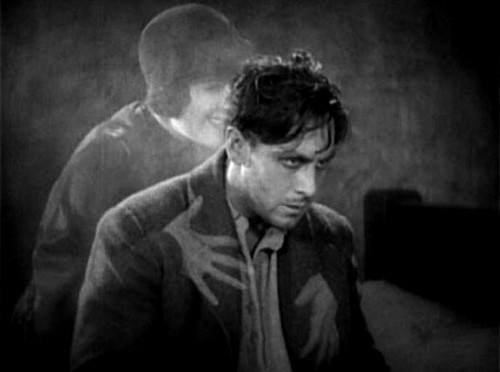
Sunrise is a silent film that was released at the end of the silent era when artistic film technique had reached its peak. It won the first and only Oscar for “Unique and Artistic Production” and that’s a good description of the movie. The story, which seems like it should be unbearably sappy – a woman from the city tempts a farmer away from his wife, he tries to murder the wife, but they rediscover their love for each other – is rendered in such surprisingly interesting visuals that it all works somehow. The story doesn’t say much in itself, except for early 20 th century ideals about how virtuous women should be meek and forgiving, sexual women are dangerous and conniving, and men will do anything for either type of woman (and that women fit into those types). But the movie uses its visuals as more than then-modern showcases of special effects and camerawork. The techniques fit to tell a simple and pure story of love and marriage and it all fits together. The ending is also genuinely powerful.


#81 – Spartacus (1960) – Stanley Kubrick


Spartacus raises a loyal army of slaves and leads a rebellion against the Roman Empire, solely on the strength of his integrity and his cleft chin. The two together – the good character and the rigid masculinity – combine in Spartacus to form a noble manliness. A real man, as shown by Spartacus and the dedicated army he inspired, is equal parts hard and soft, and knows when to use each.

Spartacus is one of the great characters of film, and Spartacus is the best epic I have ever seen.


#80 – The Apartment


If Spartacus was the right amount of hard and soft, “Buddy Boy” C.C. Baxter is only soft. He allows himself to get taken advantage of by men more powerful than he is, lending out the key to his apartment so his superiors can use it for illicit rendezvous with women who aren’t their wives. He is walked all over, over and over, until one day finally… Well, I’m not sure the day really comes.


#79 – The Wild Bunch


“If they move, kill ‘em,” William Holden tells his gang at the beginning, but the instruction seems to apply throughout the whole movie. Because a lot of people move. The “Wild Bunch Ending” became a screenwriting term, referring to the chaotic bloodbath that seems destined to come where lawlessness lives. Peckinpaw shows the senselessness and inevitability of violence, shot with disorienting cuts and zooms and a soundtrack of gunshots and the screams of the dying. Trains and cars are starting to arrive in the west and it signals the death of a way of life that was rough and pointless. Death to death and more death.


#78 – Modern Times (1936)


When the worker is literally a cog in a machine, the worker has no rights. Charlie Chaplin was accused of being a communist and a socialist (and eventually condemned for it?). Whatever he was, he had sympathy for the workers, the people at the bottom of the food chain, the scraps at the bottom of the barrel, the bottom rung of the ladder. His character gets swept up into union protests and labour rights disputes, he works on an assembly line, and ends up in jail for reasons unclear. The system seems to grind and grind: as long as there is production it doesn’t matter how it’s produced, or even what it is producing. Modern Times is a satire and a cutting critique, as it gently points out and calls out the absurdity of the modern state and its systems, and it does it without saying a word.

Wednesday, September 7, 2016

Top 5 Movies of 2016 so far

Most ‘best of the year so far’ lists are released halfway through the year. I’m doing mine now. We just survived a real dud of a summer blockbuster season, but there have been some great movies this year. They’ve been sprouting up here and there – sometimes it just takes a little weeding to find them.

5. The Lobster


At one point in The Lobster a woman tries to kill herself by jumping out of a first-floor window. As she lays bloodied on the sidewalk her screams of agony are played as a joke. That’s the darkness of the humor in this movie. And it is funny – the woman had much higher windows available to her. It’s also a critique of love and dating, as she was driven to such foolish desperation by the fact that she was on her last day to find a mate, and if she failed she would be turned into an animal. The botched suicide also serves our hero’s (Collin Farrell) purposes: as compatibility is taken dead-literally, the woman he’s interested in watches the suffering jumper with casual indifference and so he does too (he wins her over when she fakes choking to death in a hot tub and he just watches her sink into the water). It’s absurd and weird and darkly funny (though there is plenty of light humor as well – the dance scene in the forest is hilarious and no one gets killed). It’s also full of insight that I think will take more than one viewing to totally grasp.


4. Krisha


Krisha is director Trey Edward Shults’ feature debut. The movie cost $14,000 to make and was shot using mostly Shults’ friends and relatives as actors. I didn’t know this before I watched it and was amazed at how well the movie captured the reality of family gatherings. Krisha takes place over one Thanksgiving evening. The extended family is all together – brothers and cousins in college, great grandma makes it home, there’s a new baby, and Krisha has come back after having been away for years. People sit and chat, play games, watch sports, horse around, play with dogs, and it all happens exactly as those things happen in real life. The jokes are jokes real people make and the conversations are real conversations. Shults’ casting choice may have been forced by his small budget, but it’s also crucial to the movie’s success. I’ve never had a family gathering fall apart like this one does, but I’m sure it would happen the way it happens here. There is a lot of discomfort and awkwardness, like when something doesn’t go quite right in someone else’s house, or like watching your friend’s parents fight. You just want to get out of there but you have to be polite. Krisha captures that tension and the complicated and sometimes messy details of extended family life. Shults’ next film is set to be a horror movie and you can see that interest in Krisha. There’s nothing scary or disturbing, but Krisha’s return, like a ghost or an intruder in a horror film, has the disruptive effect that troubled family members often bring home with them.


3. Everybody Wants Some!!


This movie has been described as a spiritual sequel to 199_’s Dazed and Confused. But Everybody Wants Some!! is director Richard Linklater’s follow-up to last year’s Boyhood, the 12-years-in-the-making exploration of, well, boyhood, and this movie is more of a continuation of that one. It follows the adventures and misadventures of college-aged guys, in a way, picking up where Boyhood left off. These college guys are all baseball players at the end of their boyhood facing the excitement and anxieties of stepping towards manhood.

It’s set in the 80s and it is funny so it could easily have fallen into the stereotypes of 80s comedies like Revenge of the Nerds, Weird Science, or Animal House, where there are only jocks and geeks and babes and everyone plays their role. But here the characters are unique and complicated. Just when you expect one to be a certain kind of guy he’ll do something that that type of guy doesn’t do. And yet it’s also realistic, as it shows the way guys that age act – the jokes they make, the fun they have, and even the doubts and fears they face as they go from being big fish in small ponds to just fish. The movie also avoids turning the guys into a bunch of unlikable jocks. Everyone here is fun to spend time with. It also avoids structural clichés – where things work for a while, a roadblock is hit, then everyone learns a lesson. Life doesn’t happen like that and the movie doesn’t go that way. Life just begins happening.


1. The Witch


1. Hunt for the Wilderpeople


I have a tie. I thought Hunt for the Wilderpeople would be a clear number one since I had such a great time watching it. But The Witch has left me with so much more to chew on and I can’t shake it.

It’s hard to say The Witch isn’t a horror movie. After all, Satan is in the movie and there is at least one witch. But it was marketed as a scary movie and people who went to it expecting that thrill of feeling terrified went home disappointed, and I think, missing the point of the movie (I mentioned this problem when I wrote about the Sixth Sense). The Witch is scary, but it’s a lot more than that.

Set in New England in the 1600s, the movie tells the tale (and really, it is a tale – the subtitle is “A New England Folktale”) of a family exiled from their Puritan establishment when the father refuses to compromise his beliefs. Those beliefs are the family’s main crop and its sustenance as their corn crop is failing and there’s nothing in the woods by their isolated house. Except that there is.

The family consists of the parents, a baby, two young twins, a young boy, and an adolescent girl, and without spoiling anything, things happen to each of them one by one and those things aren’t pleasant.

But the movie centers around belief. Here it is not the charitable, all-loving Christianity, but the hard Christianity of self-loathing, guilt, and the crushing weight of demanded perfectionism – the gospel of inadequacy, desperate for grace and redemption. At one point the boy recites, “My corrupt nature is empty of grace, bent unto sin, only unto sin, and that continually.” And the family’s isolated and fragile circumstances magnify this severe, punishing belief until it becomes the obsessive and almost fanatic devotion of believers who have nothing else but their belief. So when the terrible things start happening we wonder if they are really happening, or if it’s the imagined terrors of the desperately devout.

The terrors from the woods gradually mutate this desperate belief until it infects the family and tears it apart. There are frightening and disturbing scenes, the acting is wonderful, and the period setting, complete with accurate dialogue (watch it with subtitles), is unique and adds to the haunting atmosphere. “What went we out into this wilderness to find?” the father asks at the beginning. If you haven’t seen The Witch, you should find out.


Hunt for the Wilderpeople is in many ways the opposite of The Witch. It is bright, upbeat, and full of life and humor. It tells the story of Ricky Baker, a 13-year-old boy who has bounced around foster homes and the child welfare system because of his various crimes that include “kicking stuff, knocking stuff over, and spitting.” The movie begins with his arrival at Hec and Bella’s house way out in the New Zealand wilderness. Things look good for a while for Ricky but they take a turn and he decides to run away. Hector quickly finds him but injures himself and the two’s delayed return is misinterpreted and leads to a national manhunt.

The gruff-old-guy-takes-a-youngster-under-his-wing formula has been done before, but Wilderpeople manages the perfect balance of everything and makes it fresh and fun. Every character is likable – even the villains, who remain villainous despite their likability. There’s wackiness, but it’s not over-the-top or slapstick. And there are heartwarming moments, but they’re not sappy or predictable. And it’s hilarious. It accomplishes something rare these days that the best jokes aren’t in the trailer. And even rarer: the best jokes from the trailer are even funnier in context. It’s a wonderful and positive movie and one of the best times I’ve had at a movie this year.


I didn’t mean to pick these two as my co-favorites, but it shows the power of movies that two very different films can be so affecting and enjoyable for such vastly different reasons.

Friday, August 26, 2016

#84 - Easy Rider (1969) - Dennis Hopper


When Easy Rider was released in 1969, its slogan said, “A man went looking for America. And couldn’t find it anywhere.” and the movie is that serious. It tells the story – if it can be called a story – of two bikers travelling across the US. They run into some Mexican farmers, pick up a hitchhiker, spend time at a hippie commune, end up in jail, make a friend in jail, find some prostitutes, and take drugs. It’s all 1960s counterculture. The plot and details are all sparse and vague, and yet dense and complicated.

The bikers, played by Dennis Hopper and Peter Fonda, are clearly anti-establishment. And yet they’re not hippies (though sometimes they are far out, man) and they make money selling drugs to businessmen and they want to retire in Florida. But they don’t have jobs or family or friends and they go where the wind and the road takes them, sleeping in the woods when motels reject them. And they are rejected often because they are different. They’re a symbol of freedom but freedom doesn’t always go so well. It’s an interesting contradiction – it’s both pro-rebellion and nihilistic and cynical about the fruits of such rebellion.


The scenery is beautiful, the performances are wonderful, and the drug trip scene is genuinely disturbing. It’s a difficult to movie to grasp, but that makes it interesting. The contradictions it presents feel true to life where things are never black and white. And the message may be a window into how the counterculture movement viewed itself. By the late 60s the free-spirited idealism had faded to a jaded and fatalistic cynicism. Easy Rider is in the middle of this shift. Freedom only lasts so long, it says. It burns bright, but it burns out. You can stick it to The Man, but sooner or later The Man will stick it right back.

Monday, August 22, 2016

#89-85

#89 - The Sixth Sense (1999) - M. Night Shyamalan


I once watched this in a tent in a crawlspace - and a young Mischa Barton showed up with vomit dripping out of her mouth. That didn’t happen, but it was scary when it happened in the movie.

The Sixth Sense has some genuinely scary parts, but it isn’t a horror movie. It pioneered a new breed of psychological thriller. It’s a thriller at a slow pace, with its creeping, steady sense of dread, in place of the more typical in-your-face scares or over-the-top terror. This genre has persisted to this day, and it has proven difficult to market. Big scares sell tickets, and so these scary but slow-paced psychological thrillers are billed as typical horror movies, and it leads to misunderstanding and disappointment. Movies like The Others, Shyamalan’s The Village, and this year’s The Witch all suffered from this misleading marketing. They aren’t good horror movies, but they were great at what they are (yes, even The Village).

I don’t think The Sixth Sense suffered from this misleading advertising when it was released. But it was such a unique movie that marketers and movie-goers still aren’t sure what to do with the genre it spawned.

#88 - Bringing up Baby (1938) - Howard Hawks


This was hard to sit through. Almost two hours of 1930s screwball comedy requires a concerted effort in positive viewing. I think of positive viewing as making an effort while watching. Most watching is passive (though still engaged) and it’s usually obvious why things are good or bad, exciting or boring, and so on - you don’t have to think about it. But watching Katharine Hepburn and Cary Grant flail around, bonking each other on the head, crashing into things, and chasing after a leopard with a case of mistaken identity, required a lot of effort to appreciate why 1930s audiences would enjoy such things. I realize screwball comedy is a genre and that it still exists and that it can be funny, and that Bringing up Baby was a pioneer. But the whole thing was so irritating. I think that was part of the point - watching rich people be annoying was novel and entertaining. But maybe our society offers more ways to be irritated than 1930s society did. We don’t watch movies to be irritated - we watch them to escape irritation.


#87 - 12 Angry Men (1957) - Sidney Lumet


12 Angry Men is a celebration of logic, reason, and rationality, as it portrays an idealized version of American criminal justice - the criminal justice system that, in recent years, has been seen as anything but logical, reasoned, and rational. As that ideal, the movie remains timely, despite being made in 1957. Over the course of their deliberations, the jurors gradually reveal their personalities and prejudices - some more overtly than others. And logic and reason gradually start to overcome those prejudices. It’s very unrealistic, but it’s the ideal that matters, and it’s an ideal worth depicting and striving towards.

The movie is excellent by itself as well. The action takes place only in the jury room and only through the power of conversation. As the details of the case are slowly revealed through careful deliberation, the movie manages to be thrilling and exciting, despite the case playing out only in the viewer’s imagination. All the characters and performances are also excellent.

For this last viewing we watched it on a hot summer’s night with a storm brewing, and our storm lined up perfectly with the movie’s. That added some pizazz.


#86 - Platoon (1986) - Oliver Stone


The message of Platoon was already heavy-handed even before Charlie Sheen’s voiceover at the end spells it out in explicit detail. War is hell - especially the Vietnam one - and we’re often fighting against the enemy inside ourselves. The explanation wasn’t needed, as the film shows image after image of the horrors of war - both the physical violence and the psychological damage that goes along with it. But even if it is heavy-handed, that message is still important, and it’s delivered here vividly and realistically - down in the muddy jungles and up close with the morally ambiguous killing and brutality - and without any style. It’s the stripped bare, grimy, uncomfortable truth of it all. Two characters represent the good and evil inside all of us - the good and evil that struggle against each other. The movie shows this struggle festering in the muck of war, overcoming some one way and some the other. It’s all horrible and very powerful.

Platoon is one of the better war movies I’ve seen, and it’s one of the few to make it onto this list.


#85 - A Night at the Opera (1935) - Sam Wood


A Night at the Opera is more 1930s screwball and slapstick comedy. This time it’s the Marx brothers and their schtick. The movie is little more than a showcase of the brothers’ musical and comedic talents, with a plot built around the jokes and gags instead of the other way around. Those talents, though, are real and there are some impressive scenes and some actually funny gags. The gags usually have little to do with what’s supposed to be going on - and what’s going on usually isn’t clear - but they’re lighthearted and absurd and everyone seems to be having a good time. But it does get to be annoying. There’s a lot of head-bonking, chasing, and practical joking - the kind of thing a goofy uncle would do: sometimes it’s fun, but sometimes you wish he would just go away. There’s also a plot involving a love story, all dealt with through opera singing that begs to be skipped over.


Overall, though, the legitimately funny parts and the sense of enjoyment make up for most of the irritation and cheesiness.