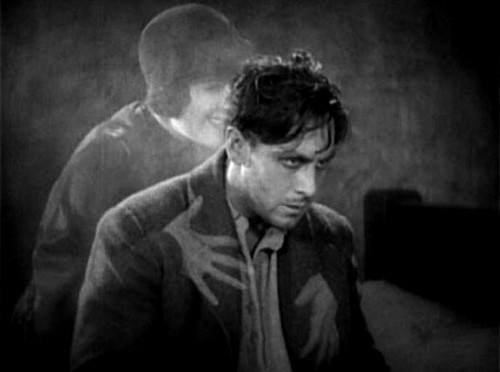
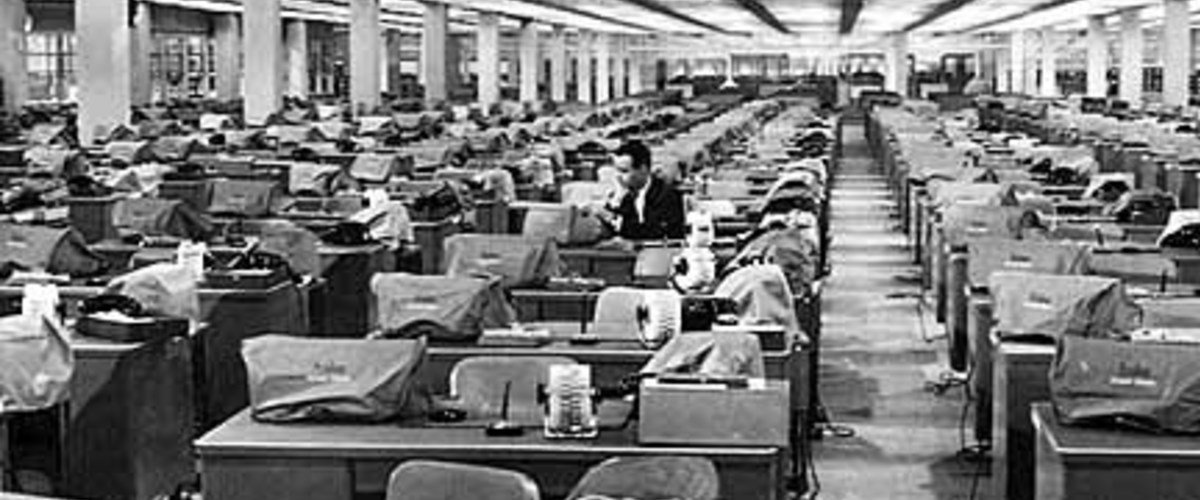
Sunrise is a silent film that was released at the end of the silent era when artistic film technique had reached its peak. It won the first and only Oscar for “Unique and Artistic Production” and that’s a good description of the movie. The story, which seems like it should be unbearably sappy – a woman from the city tempts a farmer away from his wife, he tries to murder the wife, but they rediscover their love for each other – is rendered in such surprisingly interesting visuals that it all works somehow. The story doesn’t say much in itself, except for early 20 th century ideals about how virtuous women should be meek and forgiving, sexual women are dangerous and conniving, and men will do anything for either type of woman (and that women fit into those types). But the movie uses its visuals as more than then-modern showcases of special effects and camerawork. The techniques fit to tell a simple and pure story of love and marriage and it all fits together. The ending is also genuinely powerful.
#81 – Spartacus (1960) – Stanley Kubrick
Spartacus raises a loyal army of slaves and leads a rebellion against the Roman Empire, solely on the strength of his integrity and his cleft chin. The two together – the good character and the rigid masculinity – combine in Spartacus to form a noble manliness. A real man, as shown by Spartacus and the dedicated army he inspired, is equal parts hard and soft, and knows when to use each.
Spartacus is one of the great characters of film, and Spartacus is the best epic I have ever seen.
#80 – The Apartment
If Spartacus was the right amount of hard and soft, “Buddy Boy” C.C. Baxter is only soft. He allows himself to get taken advantage of by men more powerful than he is, lending out the key to his apartment so his superiors can use it for illicit rendezvous with women who aren’t their wives. He is walked all over, over and over, until one day finally… Well, I’m not sure the day really comes.
#79 – The Wild Bunch
“If they move, kill ‘em,” William Holden tells his gang at the beginning, but the instruction seems to apply throughout the whole movie. Because a lot of people move. The “Wild Bunch Ending” became a screenwriting term, referring to the chaotic bloodbath that seems destined to come where lawlessness lives. Peckinpaw shows the senselessness and inevitability of violence, shot with disorienting cuts and zooms and a soundtrack of gunshots and the screams of the dying. Trains and cars are starting to arrive in the west and it signals the death of a way of life that was rough and pointless. Death to death and more death.
#78 – Modern Times (1936)
When the worker is literally a cog in a machine, the worker has no rights. Charlie Chaplin was accused of being a communist and a socialist (and eventually condemned for it?). Whatever he was, he had sympathy for the workers, the people at the bottom of the food chain, the scraps at the bottom of the barrel, the bottom rung of the ladder. His character gets swept up into union protests and labour rights disputes, he works on an assembly line, and ends up in jail for reasons unclear. The system seems to grind and grind: as long as there is production it doesn’t matter how it’s produced, or even what it is producing. Modern Times is a satire and a cutting critique, as it gently points out and calls out the absurdity of the modern state and its systems, and it does it without saying a word.
Most ‘best of the year so far’ lists are released halfway
through the year. I’m doing mine now. We just survived a real dud of a summer
blockbuster season, but there have been some great movies this year. They’ve
been sprouting up here and there – sometimes it just takes a little weeding to
find them.
5. The Lobster
At one point in The
Lobster a woman tries to kill herself by jumping out of a first-floor
window. As she lays bloodied on the sidewalk her screams of agony are played as
a joke. That’s the darkness of the humor in this movie. And it is funny – the
woman had much higher windows available to her. It’s also a critique of love
and dating, as she was driven to such foolish desperation by the fact that she
was on her last day to find a mate, and if she failed she would be turned into
an animal. The botched suicide also serves our hero’s (Collin Farrell)
purposes: as compatibility is taken dead-literally, the woman he’s interested
in watches the suffering jumper with casual indifference and so he does too (he
wins her over when she fakes choking to death in a hot tub and he just watches
her sink into the water). It’s absurd and weird and darkly funny (though there
is plenty of light humor as well – the dance scene in the forest is hilarious
and no one gets killed). It’s also full of insight that I think will take more
than one viewing to totally grasp.
4. Krisha
Krisha is director Trey Edward Shults’ feature debut. The
movie cost $14,000 to make and was shot using mostly Shults’ friends and
relatives as actors. I didn’t know this before I watched it and was amazed at
how well the movie captured the reality of family gatherings. Krisha takes
place over one Thanksgiving evening. The extended family is all together –
brothers and cousins in college, great grandma makes it home, there’s a new
baby, and Krisha has come back after having been away for years. People sit and
chat, play games, watch sports, horse around, play with dogs, and it all
happens exactly as those things happen in real life. The jokes are jokes real
people make and the conversations are real conversations. Shults’ casting
choice may have been forced by his small budget, but it’s also crucial to the
movie’s success. I’ve never had a family gathering fall apart like this one
does, but I’m sure it would happen the way it happens here. There is a lot of
discomfort and awkwardness, like when something doesn’t go quite right in
someone else’s house, or like watching your friend’s parents fight. You just
want to get out of there but you have to be polite. Krisha captures that tension and the complicated and sometimes
messy details of extended family life. Shults’ next film is set to be a horror
movie and you can see that interest in Krisha.
There’s nothing scary or disturbing, but Krisha’s return, like a ghost or
an intruder in a horror film, has the disruptive effect that troubled family
members often bring home with them.
3. Everybody Wants Some!!
This movie has been described as a spiritual sequel to
199_’s Dazed and Confused. But Everybody Wants Some!! is director
Richard Linklater’s follow-up to last year’s Boyhood, the 12-years-in-the-making exploration of, well, boyhood,
and this movie is more of a continuation of that one. It follows the adventures
and misadventures of college-aged guys, in a way, picking up where Boyhood left off. These college guys are
all baseball players at the end of their boyhood facing the excitement and
anxieties of stepping towards manhood.
It’s set in the 80s and it is funny so it could easily have
fallen into the stereotypes of 80s comedies like Revenge of the Nerds, Weird Science, or Animal House, where there are only jocks and geeks and babes and
everyone plays their role. But here the characters are unique and complicated.
Just when you expect one to be a certain kind of guy he’ll do something that
that type of guy doesn’t do. And yet it’s also realistic, as it shows the way
guys that age act – the jokes they make, the fun they have, and even the doubts
and fears they face as they go from being big fish in small ponds to just fish.
The movie also avoids turning the guys into a bunch of unlikable jocks.
Everyone here is fun to spend time with. It also avoids structural clichés –
where things work for a while, a roadblock is hit, then everyone learns a
lesson. Life doesn’t happen like that and the movie doesn’t go that way. Life
just begins happening.
1. The Witch
1. Hunt for the Wilderpeople
I have a tie. I thought Hunt for the Wilderpeople would be a clear number one since I had such a
great time watching it. But The Witch has
left me with so much more to chew on and I can’t shake it.
It’s hard to say The
Witch isn’t a horror movie. After all, Satan is in the movie and there is
at least one witch. But it was marketed as a scary movie and people who went to it expecting that thrill of
feeling terrified went home disappointed, and I think, missing the point of the
movie (I mentioned this problem when I wrote about the Sixth Sense). The Witch is scary, but it’s a lot more
than that.
Set in New England in the 1600s, the movie tells the tale
(and really, it is a tale – the subtitle is “A New England Folktale”) of a family
exiled from their Puritan establishment when the father refuses to compromise
his beliefs. Those beliefs are the family’s main crop and its sustenance as
their corn crop is failing and there’s nothing in the woods by their isolated
house. Except that there is.
The family consists of the parents, a baby, two young twins,
a young boy, and an adolescent girl, and without spoiling anything, things
happen to each of them one by one and those things aren’t pleasant.
But the movie centers around belief. Here it is not the
charitable, all-loving Christianity, but the hard Christianity
of self-loathing, guilt, and the crushing weight of demanded perfectionism –
the gospel of inadequacy, desperate for grace and redemption. At one point the
boy recites, “My corrupt nature is empty of grace, bent unto sin, only unto
sin, and that continually.” And the family’s isolated and fragile circumstances
magnify this severe, punishing belief until it becomes the obsessive and almost
fanatic devotion of believers who have nothing else but their belief. So when
the terrible things start happening we wonder if they are really happening, or
if it’s the imagined terrors of the desperately devout.
The terrors from the woods gradually mutate this desperate
belief until it infects the family and tears it apart. There are frightening
and disturbing scenes, the acting is wonderful, and the period setting,
complete with accurate dialogue (watch it with subtitles), is unique and adds
to the haunting atmosphere. “What went we out into this wilderness to find?”
the father asks at the beginning. If you haven’t seen The Witch, you should find out.
Hunt for the
Wilderpeople is in many ways the opposite of The Witch. It is bright, upbeat, and full of life and humor. It tells
the story of Ricky Baker, a 13-year-old boy who has bounced around foster homes
and the child welfare system because of his various crimes that include “kicking
stuff, knocking stuff over, and spitting.” The movie begins with his arrival at
Hec and Bella’s house way out in the New Zealand wilderness. Things look good
for a while for Ricky but they take a turn and he decides to run away. Hector
quickly finds him but injures himself and the two’s delayed return is
misinterpreted and leads to a national manhunt.
The gruff-old-guy-takes-a-youngster-under-his-wing formula
has been done before, but Wilderpeople manages
the perfect balance of everything and makes it fresh and fun. Every character
is likable – even the villains, who remain villainous despite their likability.
There’s wackiness, but it’s not over-the-top or slapstick. And there are
heartwarming moments, but they’re not sappy or predictable. And it’s hilarious.
It accomplishes something rare these days that the best jokes aren’t in the
trailer. And even rarer: the best jokes from the trailer are even funnier in
context. It’s a wonderful and positive movie and one of the best times I’ve had
at a movie this year.
I didn’t mean to pick these two as my co-favorites, but it
shows the power of movies that two very different films can be so affecting and
enjoyable for such vastly different reasons.
When Easy Rider was
released in 1969, its slogan said, “A man went looking for America. And couldn’t
find it anywhere.” and the movie is that serious.
It tells the story – if it can be called a story – of two bikers travelling
across the US. They run into some Mexican farmers, pick up a hitchhiker, spend
time at a hippie commune, end up in jail, make a friend in jail, find some
prostitutes, and take drugs. It’s all 1960s counterculture. The plot and
details are all sparse and vague, and yet dense and complicated.
The bikers, played by Dennis Hopper and Peter Fonda, are
clearly anti-establishment. And yet they’re not hippies (though sometimes they
are far out, man) and they make money selling drugs to businessmen and they
want to retire in Florida. But they don’t have jobs or family or friends and
they go where the wind and the road takes them, sleeping in the woods when
motels reject them. And they are rejected often because they are different.
They’re a symbol of freedom but freedom doesn’t always go so well. It’s an interesting
contradiction – it’s both pro-rebellion and nihilistic and cynical about the
fruits of such rebellion.
The scenery is beautiful, the performances are wonderful,
and the drug trip scene is genuinely disturbing. It’s a difficult to movie to
grasp, but that makes it interesting. The contradictions it presents feel true
to life where things are never black and white. And the message may be a window
into how the counterculture movement viewed itself. By the late 60s the
free-spirited idealism had faded to a jaded and fatalistic cynicism. Easy Rider is in the middle of this
shift. Freedom only lasts so long, it says. It burns bright, but it burns out. You
can stick it to The Man, but sooner or later The Man will stick it right back.
I once watched this in a tent in a crawlspace - and a young
Mischa Barton showed up with vomit dripping out of her mouth. That didn’t
happen, but it was scary when it happened in the movie.
The Sixth Sense has some genuinely scary parts, but it isn’t
a horror movie. It pioneered a new breed of psychological thriller. It’s a
thriller at a slow pace, with its creeping, steady sense of dread, in place of
the more typical in-your-face scares or over-the-top terror. This genre has
persisted to this day, and it has proven difficult to market. Big scares sell
tickets, and so these scary but slow-paced psychological thrillers are billed
as typical horror movies, and it leads to misunderstanding and disappointment.
Movies like The Others, Shyamalan’s The Village, and this year’s The Witch all
suffered from this misleading marketing. They aren’t good horror movies, but
they were great at what they are (yes, even The Village).
I don’t think The Sixth Sense suffered from this misleading
advertising when it was released. But it was such a unique movie that marketers
and movie-goers still aren’t sure what to do with the genre it spawned.
#88 - Bringing up Baby (1938) - Howard Hawks
This was hard to sit through. Almost two hours of 1930s
screwball comedy requires a concerted effort in positive viewing. I think of
positive viewing as making an effort while watching. Most watching is passive
(though still engaged) and it’s usually obvious why things are good or bad,
exciting or boring, and so on - you don’t have to think about it. But watching
Katharine Hepburn and Cary Grant flail around, bonking each other on the head,
crashing into things, and chasing after a leopard with a case of mistaken
identity, required a lot of effort to appreciate why 1930s audiences would
enjoy such things. I realize screwball comedy is a genre and that it still
exists and that it can be funny, and that Bringing up Baby was a pioneer. But
the whole thing was so irritating. I think that was part of the point -
watching rich people be annoying was novel and entertaining. But maybe our
society offers more ways to be irritated than 1930s society did. We don’t watch
movies to be irritated - we watch them to escape irritation.
#87 - 12 Angry Men (1957) - Sidney Lumet
12 Angry Men is a celebration of logic, reason, and
rationality, as it portrays an idealized version of American criminal justice -
the criminal justice system that, in recent years, has been seen as anything
but logical, reasoned, and rational. As that ideal, the movie remains timely,
despite being made in 1957. Over the course of their deliberations, the jurors
gradually reveal their personalities and prejudices - some more overtly than
others. And logic and reason gradually start to overcome those prejudices. It’s
very unrealistic, but it’s the ideal that matters, and it’s an ideal worth
depicting and striving towards.
The movie is excellent by itself as well. The action takes
place only in the jury room and only through the power of conversation. As the
details of the case are slowly revealed through careful deliberation, the movie
manages to be thrilling and exciting, despite the case playing out only in the
viewer’s imagination. All the characters and performances are also excellent.
For this last viewing we watched it on a hot summer’s night
with a storm brewing, and our storm lined up perfectly with the movie’s. That
added some pizazz.
#86 - Platoon (1986) - Oliver Stone
The message of Platoon was already heavy-handed even before
Charlie Sheen’s voiceover at the end spells it out in explicit detail. War is
hell - especially the Vietnam one - and we’re often fighting against the enemy
inside ourselves. The explanation wasn’t needed, as the film shows image after
image of the horrors of war - both the physical violence and the psychological
damage that goes along with it. But even if it is heavy-handed, that message is
still important, and it’s delivered here vividly and realistically - down in
the muddy jungles and up close with the morally ambiguous killing and brutality
- and without any style. It’s the stripped bare, grimy, uncomfortable truth of
it all. Two characters represent the good and evil inside all of us - the good
and evil that struggle against each other. The movie shows this struggle
festering in the muck of war, overcoming some one way and some the other. It’s
all horrible and very powerful.
Platoon is one of the better war movies I’ve seen, and it’s
one of the few to make it onto this list.
#85 - A Night at the Opera (1935) - Sam Wood
A Night at the Opera is more 1930s screwball and slapstick
comedy. This time it’s the Marx brothers and their schtick. The movie is little
more than a showcase of the brothers’ musical and comedic talents, with a plot
built around the jokes and gags instead of the other way around. Those talents,
though, are real and there are some impressive scenes and some actually funny
gags. The gags usually have little to do with what’s supposed to be going on -
and what’s going on usually isn’t clear - but they’re lighthearted and absurd
and everyone seems to be having a good time. But it does get to be annoying.
There’s a lot of head-bonking, chasing, and practical joking - the kind of
thing a goofy uncle would do: sometimes it’s fun, but sometimes you wish he
would just go away. There’s also a plot involving a love story, all dealt with
through opera singing that begs to be skipped over.
Overall, though, the legitimately funny parts and the sense
of enjoyment make up for most of the irritation and cheesiness.
“As far back as I remember, I always wanted to be a
gangster,” Ray Liotta’s Henry Hill tells us in a voiceover at the beginning of Goodfellas. This comes a few seconds
after we watch him and his fellow gangsters finish off a brutal murder, and in
that context he’s hard to believe – who grows up hoping to do something like
that? But in this case Henry doesn’t actually do any of the stabbing or
shooting himself, he’s just the driver. And the look on his face is one, not so
much of disgust or surprise, but of slight uneasiness and subtle discomfort,
like he’s seen such things before but doesn’t enjoy it or revel in it like his
associates seem to. That subtlety is the heart of the movie, as it follows
Hill’s rise through the ranks of the “family” of gangsters while exploring the
hallow grandiosity of their lifestyle and world.
The voiceover leads to the early years of Hill’s life when
he was dreaming of the gangster life. And from his teenage perspective it’s
easy to see why. It’s all money and power and freedom. As Hill ages and moves
up the organization, he is no less awestruck by the money and power and freedom
he wields himself. This freedom and power leads to plenty of unpunished
violence and crime, with the cool looks of the wiseguys always assuring
themselves that everything is under control. Hill enacts most of his “business”
at the side of Tommy DeVito (Joe Pesci) and James Conway (Robert De Niro). Both
are loose cannons – Conway more menacingly so, and DeVito more obviously as he
murders in petty fits of rage.
Eventually, the gangsters arrogantly try to control the
uncontrollable and things start to fall apart. And it is the look on Hill’s
face at the beginning that is most telling. He’s as wrapped up in the violence
and crime as anyone else, but he seems to recognize the truth of it all. He
knows DeVito is a lunatic and that Conway is ultimately incapable and that
plans are going to fall apart and that they’re not immune from law and
punishment. But he won’t admit it, as he desperately and pathetically tries to
keep the dream alive long after it is dead, as he can’t stand being an “average
nobody.”
Goodfellas is an
excellent, honest, and realistic portrait of the fast, but ultimately hollow
and short, lives of gangsters, and is well-deserving of its place in the
pantheon of gangster movies.
#91 - Sophie’s Choice (1982) - Alan J. Pakula
Sophie’s Choice follows
an aspiring writer named Stingo (Peter MacNicol) to New York, where he rents a
room in the same building as Polish refugee Sophie (Meryl Streep). He quickly
becomes friends with her and her abusive and erratic boyfriend Nathan (Kevin
Kline). They gallivant around and dress and act like characters from The Great Gatsby while poor Stingo is
the third wheel but wishes he was the second. Nathan acts stranger and stranger
and Sophie seems to have something to get off her chest. Meryl Streep is
amazing as Sophie and she plays her desperate longing and private torment with
a powerful subtlety, and does it in multiple languages. I think it’s so
well-established that Streep is the world’s best actress that we get tired of
it and look for someone else. But no one else could do what she does in Sophie’s Choice.
The movie is two and a half hours long, and it’s a long two
and a half hours. At its heart Sophie’s
Choice is a Holocaust movie, but it only spends a fraction of its time on
the holocaust. The rest is spent on the three friends, their weird dynamic, and
Nathan’s psychosis. And that might be an interesting movie in itself. But the Holocaust
sectionsare so good and so powerful
that the trio of friends get tiresome and almost irrelevant.
The choice in Sophie’s
Choice is gut-wrenching and awful. It’s horrible to watch, but also
important. The scene manages to distill the terror and sickening evil of the Holocaust
down to one individual parent’s unimaginable nightmare. It brings the sometimes
unfathomable scale of the Holocaust down to a single relatable horror, making
it possible to begin to appreciate the awfulness of the whole thing. In doing
so it achieves what all entertainment dealing with the Holocaust should achieve
and does it without being exploitative.
#90 - Swing Time (1936) - George Stevens
Swing Time is a
romantic comedy musical, but it’s mostly a dance movie. Fred Astaire and Ginger
Rogers dance their way through the rom-com conventions their 1930s movies
helped establish – the zany coincidences, misunderstandings, and mistaken
identities – and do it with such skill and chemistry that is fun to watch. Movies
like Swing Time are what make this
project worthwhile. It’s not a movie I would have chosen to watch otherwise – I
don’t usually watch musicals, romantic comedies, or dance movies. But I really
enjoyed it.
And I don’t know much about dance, but I can tell when
someone is really good at something. And Fred Astaire and Ginger Rogers are
great dancers, and they seem to know it and to dance as though celebrating how
great they are and how well they do it together. But it’s confidence and not
arrogance and their enjoyment is contagious. The two also have amazing
chemistry that comes from working together on many different films. They bring
a classiness and charm that transcends all the cheesiness and leaves them just
plain likeable.
The plot is as goofy as most in the genre. Astaire forgets
to go to his wedding and has to go to New York to prove to his jilted fiancée that
he can make $25,000 in order to deserve a second chance. But while in New York
he accidentally becomes half of a famous dance partnership with Rogers. Sparks
fly and it’s obvious where things are headed. But it’s all good fun. All the
actors seem to know it’s ridiculous but have a great time anyway.
The original Independence Day has a 61% rating on Rotten
Tomatoes. That’s somewhere between fresh and rotten - probably like tomatoes
that have been sitting out for a few days and have starting losing colour and
flavour. Not exactly high praise. It’s a much lower rating than I expected. I
assumed Independence Day was awesome and that everyone else thought so too. So
I revisited it a couple weeks ago.
And Independence Day is still awesome.
It actually probably isn’t, but I grew up feeling that it
is, and that feeling has been there - as the new one reminds us at least 35
times - for 20 years, so it’s not going away now. Sometimes revisiting
childhood favourites is underwhelming and disappointing, as these sacred
objects turn out to be false idols (fans of the original Ninja Turtles movies,
leave your happy memories alone - don’t watch them as an adult). But sometimes
things line up perfectly - like a spaceship over the White House - and the results
are explosive. The perfect way to become a lifelong Independence Day fan is to
be 10 years old when it was released in 1996.
And I think the only way to become an Independence Day:
Resurgence fan is to be 10 years old in 2016.
The aliens are back, for reasons unclear. They want the
Earth’s core, yes, but they also seem to be pretty pissed that President Bill
Pullman’s speech from the original has made it onto so many “Top 10 Best Movie
Speeches” click-bait websites. One of the boss aliens had the speech on loop -
I guess it got the recording from that megaphone somehow, or bought the VHS of
the movie - and had been torturing itself, again, for 20 years(!). I was
surprised we didn’t see its dartboard with Pullman’s portrait taped to it. But
anyway, they’re back.
And so is almost everyone from the original. Whether they
should be is another question, but it doesn’t matter because the movie
shoehorns them in wherever it can. Jeff Goldblum saved the world the first time
and so now he’s in charge of everything. His dad is back (Judd Hirsch), and the
movie doesn’t let us forget he’s Jewish (everyone is a putz). Bill Pullman is
back, played mostly by his beard (though the beard leaves when it’s time to get
serious). Even the guy who got squeezed and used as a ventriloquist dummy
(“reeeeleasssse meeeee!”) is back, even though he was definitely dead in the
first one, but oh well.
Conspicuously missing is Will Smith, and that’s the problem.
In his place is his character’s son (played by Jessie Usher) and Thor’s brother
Liam Hemsworth. And it’s like replacing a gourmet steak and lobster dinner with
two pieces of unbuttered toast. That sounds like an overstatement, but it
isn’t. 1996 Will Smith was Will Smith at the peak of his powers. Independence
Day established him as the movie star and we haven’t really had anyone like him
since his decline. Will Smith’s charisma was as big as the alien ships. It was
as big as the movie itself, which spawned a new era of summer blockbusters. If
the original itself wasn’t good, and again it probably wasn’t, it didn’t
matter. Will Smith’s charm carried it. So even though 10 year old boys love
aliens, fighter jets, spaceships, and explosions, if you take out Will Smith,
the movie isn’t memorable. The original probably has as many problems as
Resurgence, but it doesn’t matter. The original had 1996 Will Smith. Hemsworth,
on the other hand, is like a contestant on The Bachelorette who doesn’t get any
screen time because all he is is handsome and probably nice. All the other
characters are just as dull and aren’t even worth mentioning, and there is way
too many of them. It’s like Emmerich knew it would take 10 young actors in 2016
to make up one Will Smith in 1996. But they don’t even come close.
There are plenty of other problems. There are no real stakes
when the stakes are so huge - half the planet gets flattened but no one is
really that sad. There are awkward references to the original, like one
completely recreated scene, or when President Hilary Clinton (actually
President Lanford, played by Sela Ward) shouts “there will be no peace!” for
some reason. And everyone has an annoying sidekick - Hemsworth’s sidekick is
horny for a Chinese pilot who later becomes his sidekick, there’s a guy in a
suit tagging along with Jeff Goldblum until he trades in for an African
warlord, leaving Goldblum with Charlotte Gainsbourg who is a psychiatrist for
some reason, and Hemsworth and Usher are mad at each other but then they’re
pals. It’s all a mess.
There are some fun scenes - I’m always up for a giant
monster, and I’m a sucker for disaster movies. Some of the action sequences are
spectacular. And there are some interesting ideas: in the intervening, again,
20 years (!) since the aliens last attacked, all the societies on Earth have
collaborated and used the leftover alien technology to advance the global
civilization. It could be a big mess of mindless fun, and 10-year-olds will
probably like it. But without a real star or a single interesting character to
care about, it remains flat, dull, lazy, and bloated, and those 10-year-olds
won't love it when they're 30.
We’re all just attending boring prep school without the
Fresh Prince.